FREE SHIPPING ON ORDERS OVER $200

How to Choose the Perfect Dress for Your Body Shape
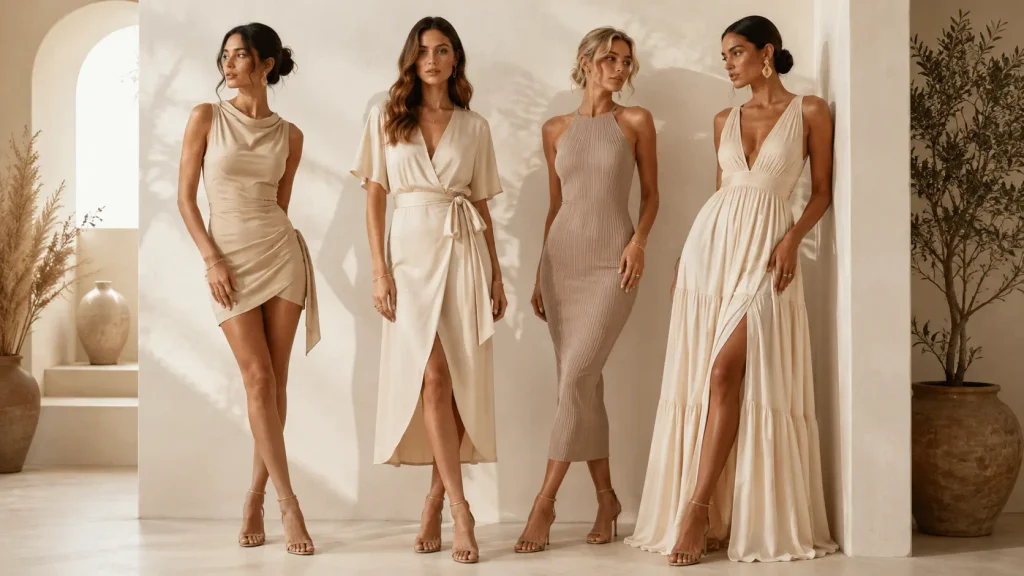
Finding a dress you love is one thing. Finding one that makes you feel completely comfortable the moment you put it on? That’s different.
We’ve all had that fitting-room moment when a dress looks beautiful on the hanger but somehow doesn’t feel quite right once it’s on. Usually, it isn’t about your body needing to change. It’s simply that different cuts, lengths, and details sit differently on different proportions.
Understanding your body shape can make shopping a little easier — but think of it as a guide, not a set of rules. If you love a dress and feel great wearing it, that matters far more than which category it supposedly belongs in.
Here are a few things worth looking for when choosing your next dress.
First, Find Your Natural Shape
You don’t need complicated measurements to get a general idea of your proportions. Stand in front of a mirror and look at the relationship between your shoulders, waist, and hips.
Most body shapes are loosely described as hourglass, pear, apple, rectangle, or inverted triangle. You may fit neatly into one of them, or you may be somewhere in between. Both are completely normal.
The goal isn’t to label your body. It’s simply to understand which silhouettes tend to create the look you want.
Hourglass Shape
If your shoulders and hips are fairly balanced and your waist is naturally defined, you may have an hourglass shape.
Dresses that follow your natural waist often work beautifully. Wrap dresses are an easy favorite because they create definition without feeling overly structured. Belted dresses, fitted midi styles, and softly tailored silhouettes can work just as well.
Look for:
- Wrap dresses
- Belted styles
- Fit-and-flare dresses
- Fitted midi dresses
- V-neck and sweetheart necklines
One small tip: oversized, completely shapeless dresses can sometimes hide your natural proportions. If you love a relaxed silhouette, adding a belt can change the entire look.
Pear Shape
A pear-shaped figure usually means the hips are wider than the shoulders, often with a more defined waist.
A-line dresses are especially flattering because they follow the waist and fall naturally over the hips. Dresses with interesting sleeves, statement necklines, or details around the shoulders can also create a beautifully balanced silhouette.
Try:
- A-line dresses
- Fit-and-flare silhouettes
- Off-the-shoulder styles
- Dresses with statement sleeves
- Midi and maxi dresses with a defined waist
For an evening look, a fitted bodice paired with a flowing skirt is one of those combinations that rarely feels overdone.
Apple Shape
If you tend to carry more fullness through the middle while your legs are relatively slimmer, you may have an apple-shaped figure.
Instead of trying to hide your waist, look for dresses that create long, clean lines and skim the body comfortably.
Wrap dresses can work wonderfully here too. So can empire-waist dresses, relaxed shirt dresses, and V-neck styles.
Look for:
- Empire-waist dresses
- Wrap silhouettes
- V-necklines
- Relaxed A-line dresses
- Dresses with soft, flowing fabrics
And don’t automatically avoid shorter hemlines. If you love your legs, a mini dress with a simple silhouette can look fantastic.
Rectangle Shape
With a rectangle body shape, the shoulders, waist, and hips tend to have similar proportions.
This shape gives you plenty of room to play with silhouettes. If you want to create more definition at the waist, look for dresses with ruching, belts, cut-outs, or structured seams.
Good options include:
- Belted dresses
- Ruched styles
- Fit-and-flare silhouettes
- Dresses with puff sleeves
- Tiered dresses
- Slip dresses
You can also experiment with layers. A blazer over a slip dress, for example, can completely change the shape and mood of the outfit.
Inverted Triangle Shape
If your shoulders are broader than your hips, you may have an inverted triangle shape.
Dresses with simpler details around the shoulders and a little more movement through the skirt can create a balanced silhouette.
Consider:
- A-line dresses
- Pleated skirts
- Fit-and-flare styles
- V-neck dresses
- Dresses with fuller or flowing skirts
You certainly don’t have to hide your shoulders. In fact, simple sleeveless dresses can look incredibly elegant. It’s more about deciding whether you want to emphasize your shoulders or balance them with the rest of your outfit.
What About Dress Length?
Body shape is only part of the equation. Dress length can completely change how an outfit feels.
Mini dresses feel playful and confident and are great when you want your legs to be part of the look.
Midi dresses are probably the easiest length to wear. Depending on the fabric and styling, they can work for brunch, the office, dinner, weddings, or even vacation.
Maxi dresses create a longer silhouette and can feel either wonderfully relaxed or very elegant. A flowing maxi with flat sandals feels effortless during the day; add heels and jewelry, and it becomes an evening look.
There isn’t one “correct” length for any body type. Try different proportions and pay attention to where the hem falls on you.
Fabric Makes More Difference Than You Think
Two dresses with almost identical cuts can look completely different because of the fabric.
Structured materials tend to hold their shape and create sharper lines. Softer fabrics move with the body and usually create a more relaxed silhouette.
When shopping online, look beyond the photos. Check the fabric composition, whether the material stretches, and how the garment fits the model. Those little details can tell you much more about how a dress will actually feel.
The Best Dress Is the One You Keep Reaching For
Body-shape guides can make shopping easier, but they shouldn’t decide what you’re allowed to wear.
Fashion becomes much more interesting when you stop treating every styling suggestion as a rule.
Maybe the dress that technically “should” suit your shape isn’t your style. Maybe the oversized maxi everyone tells you to avoid makes you feel amazing. Wear it.
The best pieces in a wardrobe aren’t necessarily the most flattering according to a chart. They’re the ones you put on without overthinking, walk out the door in, and genuinely enjoy wearing.
That’s usually a much better sign that you’ve found the right dress.